
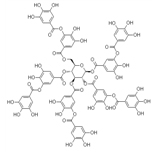
Tannic Acid Molecular Structure:
|
Specification |
Edible Tannic Acid (Mashing Type) |
|
Standard |
Enterprise Standard |
|
Appearance & Taste |
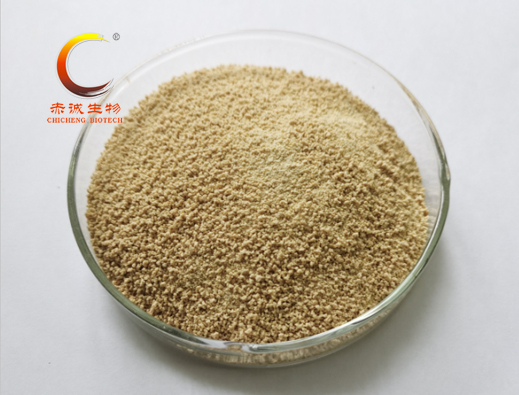
Pale yellow to brownish-yellow granular powder; natural pure astringency without off-flavors or harsh bitterness. |
|
Content |
≥97% |
|
Loss on Drying |
≤9% |
|
Water Insolubles |
≤0.1% |
|
Residue on Ignition |
≤0.2% |
|
Heavy Metals |
15 ppm |
|
Arsenic |
<3 ppm |
|
Lead |
<5 ppm |
|
Mercury |
<1 ppm |
|
Gallic Acid |
≤1.0% |
|
pH Value |
3-4 |
|
Solubility in Water |
Clear and transparent, no precipitate or impurities |
|
Production Capacity |
600 T/Y |
|
Packaging |
Fiberboard drum, 20 kg/drum |
Application: Beer mashing tannin is high-purity tannic acid extracted from Chinese gallnuts by purely physical methods. It is suitable for the mashing or boiling process in beer brewing, can selectively adsorb high-molecular-weight proteins in wort, reduce aldehyde substances in beer, enhance beer antioxidant capacity, and improve beer non-biological stability and flavor stability.
Usage: Use deoxygenated brewing water or distilled water; prepare a 5–10% tannin solution before use.
Addition during mashing: Add the diluted tannin solution to mashing water before adding malt powder. Recommended dosage: 40–80 ppm.
Addition in boil kettle: Add 5–10 minutes before end of boil; or add to the pipeline when transferring wort to the wort clarifier.
Recommended dosage: 30–60 ppm.
Preparation Method: Use stainless steel or plastic containers; at room temperature add deoxygenated water or distilled water and stir rapidly. When a vortex forms, slowly pour mashing tannin into the container while stirring until completely dissolved as a 20–25% solution. Dilute to 5–10% solution before use. Minimize oxygen contact. Avoid iron, aluminum and other metal containers and utensils.
Are you ready to purchase
the products with confidence?
Contact our domestic marketing, feed, or international trade teams.
We’d love to hear from you.